


Well inspection with PHREACAM
Reliable hydraulic investigations begin with the assessment of monitoring well construction and condition
By initially assessing well construction and condition, well inspections support hydraulic aquifer testing and groundwater sampling campaigns. They help to detect suitable depth for sampling and testing in order to securely plan hydraulic tests and to avoid invalid analytical results at an early stage. They help determine the need for cleaning or regeneration of the well prior to use. As preliminary assessment, they play an important role in our quality management.
We have developed the automated inspection system PHREACAM® for unattended optical inspection of monitoring wells. The optical recording is performed automatically and requires no personnel. Preparatory work for groundwater sampling or hydraulic tests can be carried out simultaneously, thereby saving work time. The recorded video footage is reviewed and evaluated after retrieval of the PHREACAM® and can be analyzed efficiently using fast-forward playback to quickly gain relevant information.
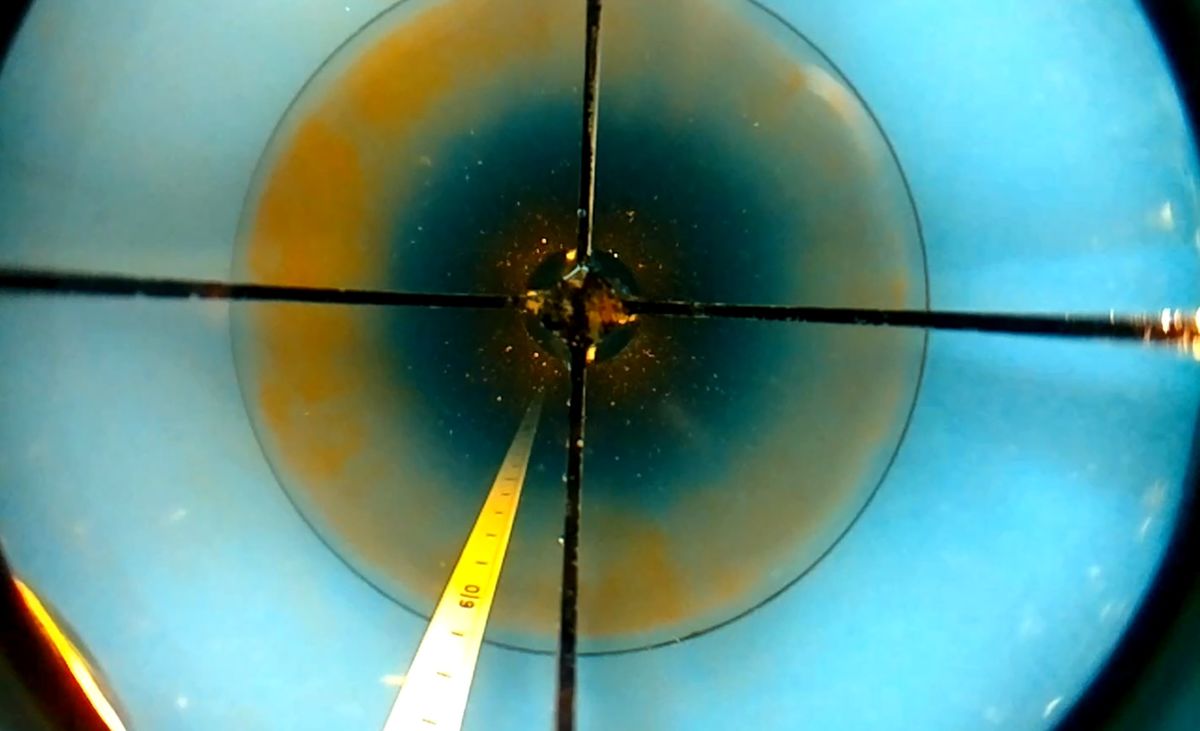
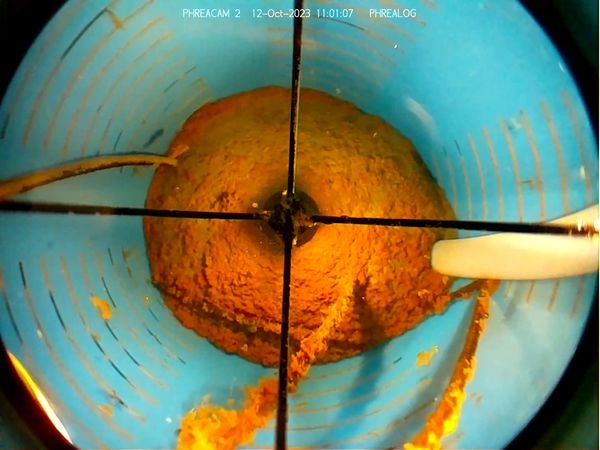
Camera inspections are used for locating pipe joints and damages, and serve to access the direction of filter screen orientation. Incompletely screwed pipe joints and structural defects in the well pipe may indicate the ingression of extraneous water. Camera inspections can reveal free-phase LNAPL and obstructions and provide information on sediment accumulation at the bottom of the well. They can also provide evidence of stationary vertical flow within the monitoring well by reading characteristic staining patterns and streak marks along the well screen.
Older monitoring wells frequently show floating flocculated material, biofouling, incrustation, and deposits along the casing walls. These obstructions are often unevenly distributed along the screened intervals. They may clog the well screen and backfill material, leading to a significant influence on passing groundwater flow in the affected well section.
For horizontal flow measurements, it is important to define suitable measurement depth, as measurements near pipe junctions an in clogged screen sections may lead to erroneous results. As depth positions of pipe junctions are typically not documented in well construction plans, a preliminary camera inspection provides the required information and supports quality assessment.
As additional measure, we can restore older wells or partly clogged screens to meet the requirements to perform reliable measurements.
Vertical Flow Measurements
High-sensitivity vertical in-hole flow measurements support aquifer characterization and the planning of horizontal flow measurements
Groundwater monitoring wells act as preferential vertical pathways for groundwater. Depending on the hydraulic gradient, hydraulic head differences may occur and, consequently, even minor hydraulic pressure differences can induce continuous vertical flow within the well. Even low flow velocities result in a vertical redistribution of considerable amounts of groundwater within the aquifer over time.
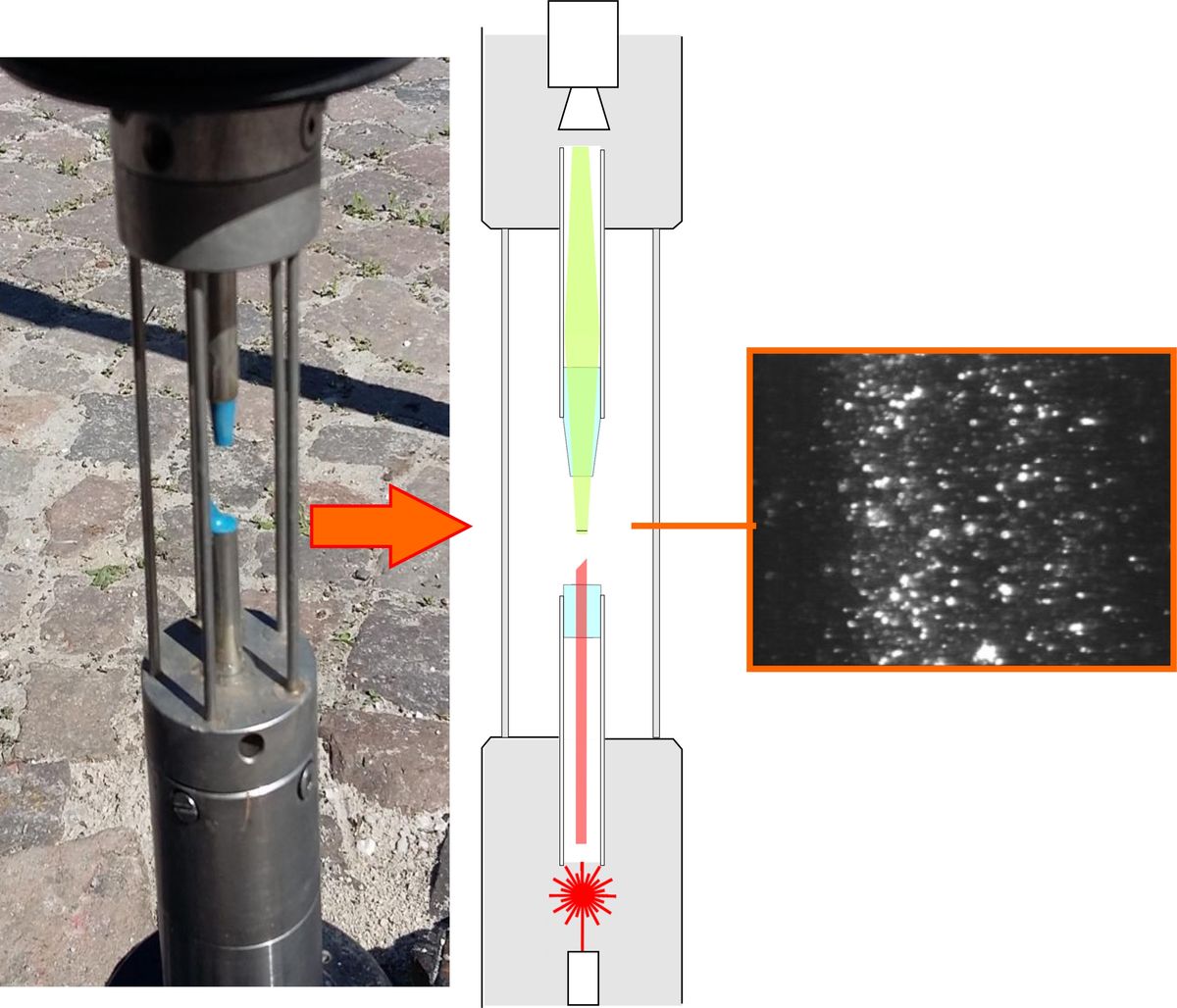
Our probes for vertical flow measurements enable real-time detection of flow velocities ranging from 10 mm/s down to less than 0.01 mm/s, allowing to quantify mass transport even at very low flow rates. In addition, active inflow and outflow zones within the well profile can be reliably identified.
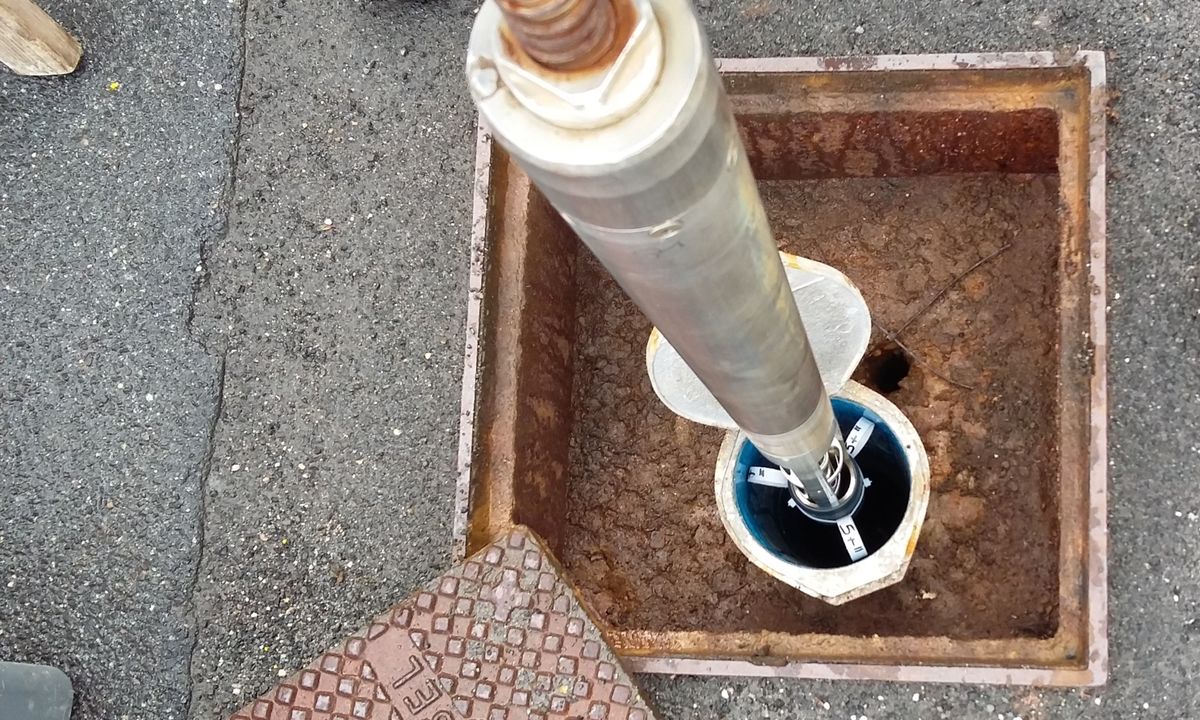
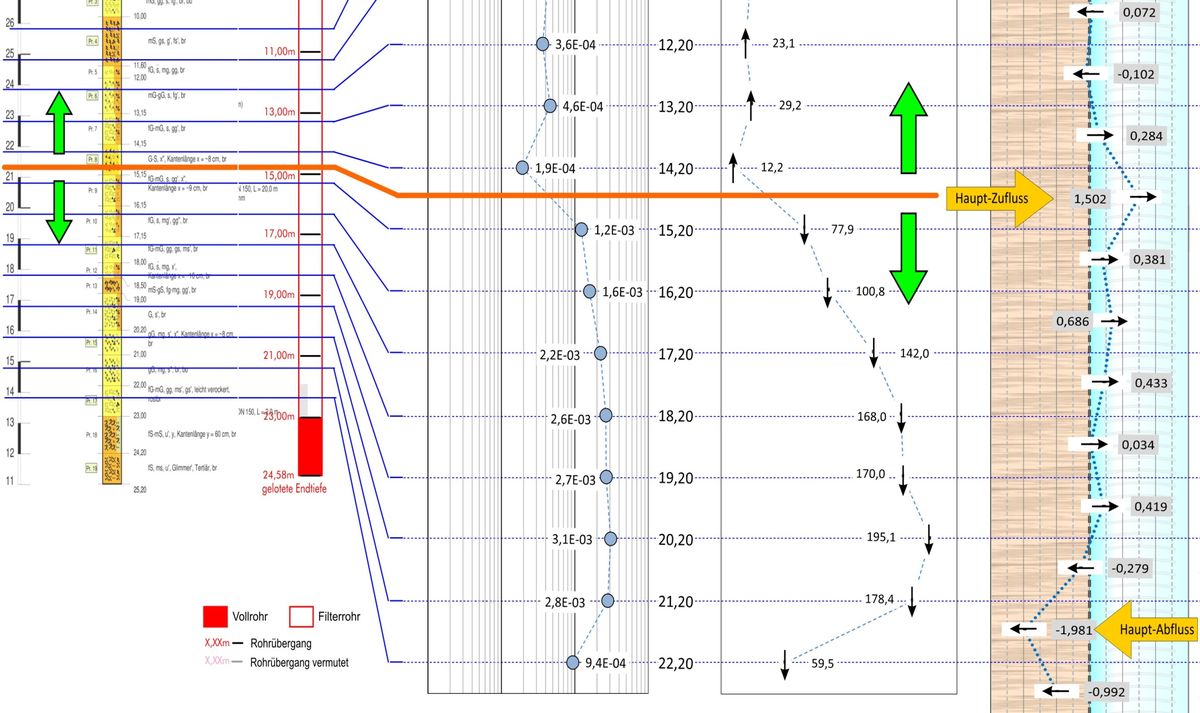
Measurements conducted by simultaneous hydraulic stimulation in the well allow to identify preferential inflow zones and to gain information on relative hydraulic conductivity. Due to the high sensitivity of the measurement probes, only low pumping rates are required to induce hydraulic stimulation and to acquire measurement data. At contaminated sites, this minimizes the amount of groundwater that must be handled and disposed of.
As a standard, we conduct vertical flow measurements in well diameters ranging from 2.5 to 8 inches and down to a depth of 100 meters. The measurements can be supplemented by temperature and electrical conductivity profiling.
Horizontal Flow Measurements
We combine multi-level flow measurements, controlled flow conditioning and our advanced process understanding to provide reliable high-resolution groundwater flow information.
Groundwater flow direction and flow velocity are generally derived from flow models based on groundwater levels measured in adjacent monitoring wells. However, the accuracy of these models may be limited if the underlying site-specific data lack the required resolution and reliability. This may occur in cases of non-correlating groundwater levels, widely spaced monitoring networks, unfavourable monitoring well configurations, an insufficient number of monitoring wells, or low hydraulic gradients.
Independently of groundwater level measurements, horizontal in-situ flow measurements can support flow modelling by providing real time flow data for flow plausibility checks, proof of concept, and refinement of side-specific flow models.
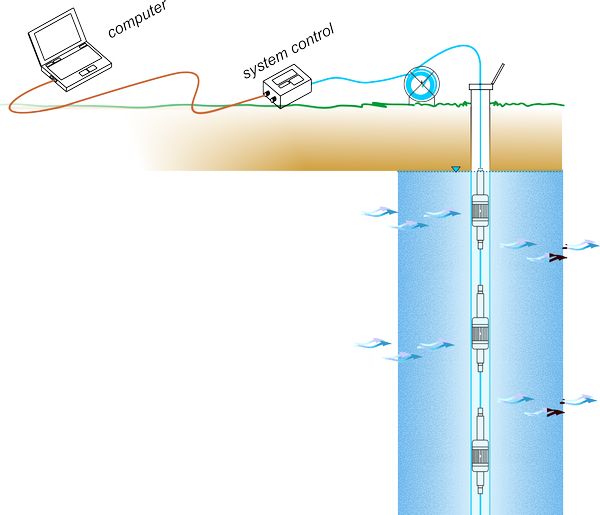
We perform multi-level horizontal flow measurements to obtain information on flow at different depths at the same time. This procedure enables the comparison and validation of measurement results, as well as the near-simultaneous detection of transient changes in groundwater flow at multiple depths within the aquifer. By applying multilevel measurements, horizontal flow movement in the vertical profile of the aquifer can be resolved in greater detail while reducing operational effort.
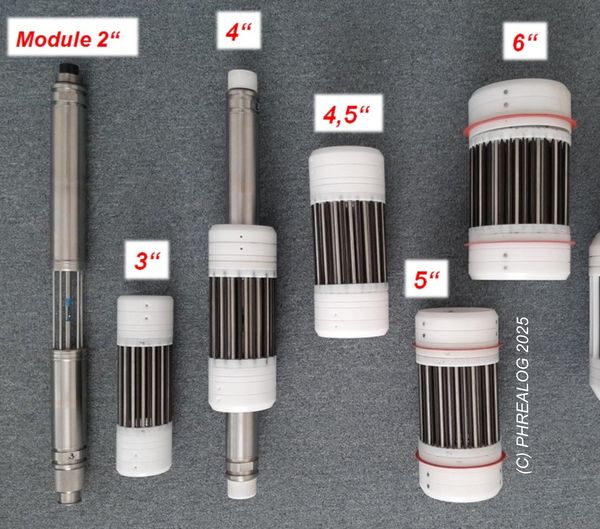
As a standard, we conduct horizontal flow measurements in combination with flow conditioning devices in well diameters ranging from 2 to 8 inches and down to a depth of 100 meters. For simultaneous multi-level measurements, we typically deploy two to four measurement devices spaced one meter apart.
Depth-Resolved Groundwater Flow Measurements
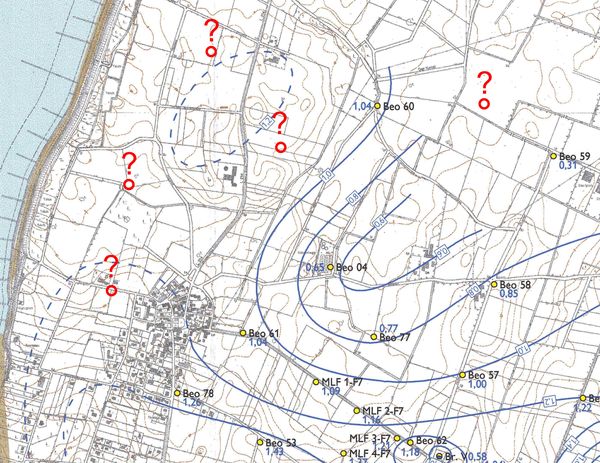
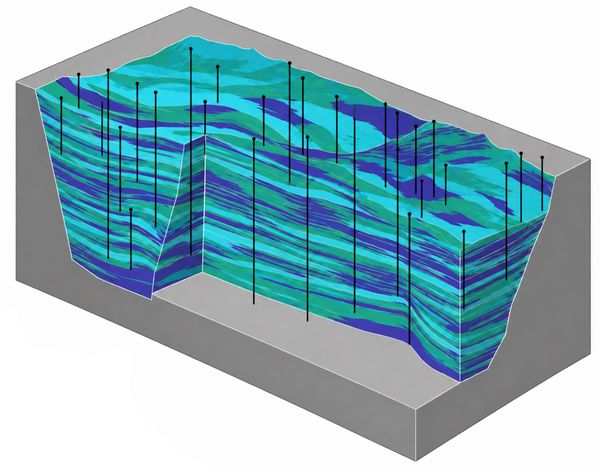
Groundwater contour maps generally draw a stationary, two-dimensional picture of groundwater flow. For large-scale assessments this is usually sufficient. However, groundwater often moves spatially through an aquifer and along preferential flow paths controlled by sedimentary structures and interconnected sediment networks. This information is often crucial for understanding groundwater flow on a local scale.
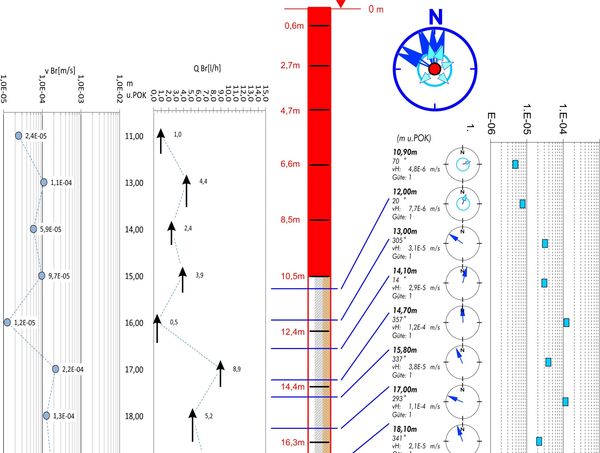
Consequently, horizontal groundwater flow measured within a monitoring well may vary significantly with depth. A reliable interpretation therefore generally requires measurements at multiple depths. PHREALOG addresses this challenge by performing horizontal multilevel in-situ flow measurements at several depths within the same monitoring well. This approach enables a higher-resolution characterization of groundwater flow throughout the aquifer profile, improves the reliability of interpretation, and can reduce the overall field effort.
It is to consider that in-situ flow measurements provide only point-or line-specific information. Depending on the sedimentary architecture and monitoring well construction, the measured flow may differ from the local groundwater flow regime. Therefore, the results of in-situ flow measurements should, whenever possible, be interpreted and evaluated in conjunction with accompanying site investigation results.
Depending on the length of the well screen section, vertical flow measurements can be performed for closer aquifer characterization and to check on vertical flow rates that might influences horizontal flow measurements. Based on these initial surveys and on borehole log data, measurement depths for horizontal flow are defined.
When used as a stand-alone investigation method, the significance of in-situ flow measurements can be substantially improved by correlating depth-resolved flow data with local sedimentary structures. To gain meaningful results, in general, flow measurements at different depths of the monitoring well are required.
Limitations of Analytical Correction Factors and the PHREALOG Approach
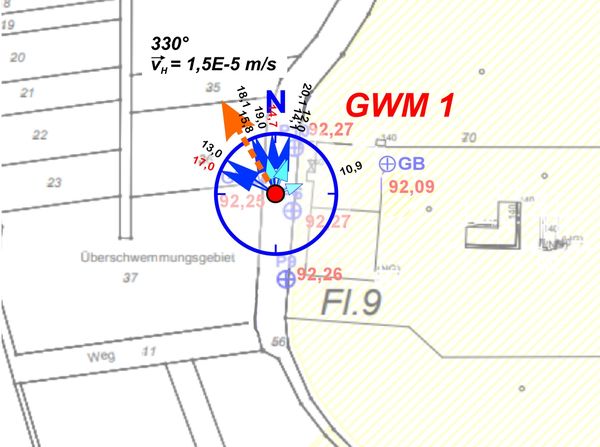
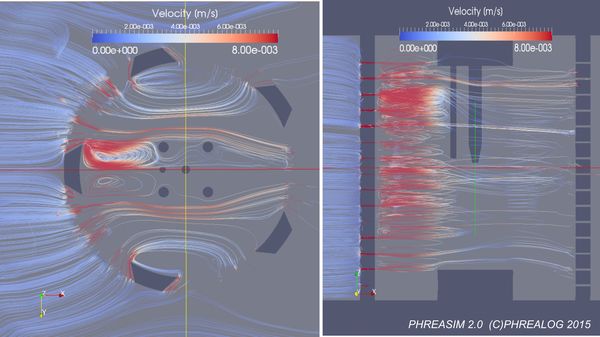
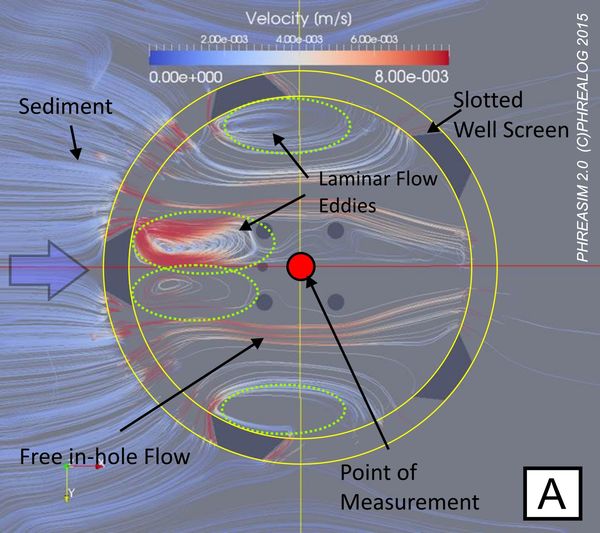
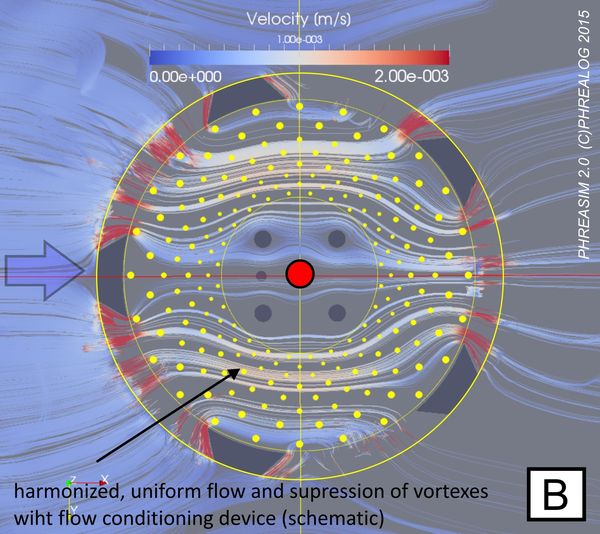
Our field experience shows that flow direction and velocity naturally vary, even within homogeneous sediment layers. Variations in flow direction and velocity within a monitoring well result from small-scale lithological heterogeneities, irregular well construction, partial clogging of screen openings or filter pack material and influences due to the orientation of well screen slots. These interactions can produce considerable well-specific flow artefacts (PHREASIM). Understanding the underlying flow processes is therefore essential for distinguishing natural groundwater flow characteristics from measurement effects caused by the monitoring well itself. Comparing flow data obtained at multiple depths significantly improves this interpretation.
The mentioned circumstances have an impact on the measured flow rates and their use for further calculations. Conventional analytical approaches commonly use a correction factor, known as “α-factor”, to describe the relationship between flow velocity measured within a monitoring well and the Darcy velocity in the aquifer. Based on the measured in-well velocity and an assumed or calculated α-factor, the Darcy velocity in the adjacent aquifer is estimated.
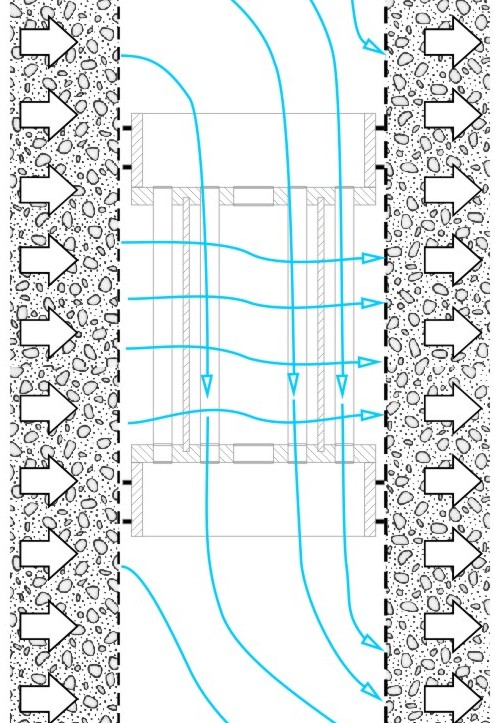
However, our experience indicates that such analytical approaches do not account for all factors influencing the hydraulic response of a monitoring well. In addition to the uncertainties already mentioned, these calculations generally do not fully account for hydraulic effects associated with well screen geometry such as the orientation of screen slots and supporting ribs relative to the direction of groundwater inflow.
For this reason, PHREALOG follows a measurement-based, statistically supported approach. By systematically collecting flow data at multiple depths, we characterize the distribution and variability of groundwater flow throughout the investigated aquifer profile, identify prevailing flow directions and velocity ranges, and calculate representative mean flow velocities where justified by the measurement data.
This approach combines extensive depth-resolved measurements with an assessment of well-specific hydraulic effects to provide a more robust interpretation of local groundwater flow conditions while reducing field effort.
Best Practice
Considering the hydraulic conditions within and around a well is essential for reliable measurement planning and for obtaining meaningful results from in-situ flow measurements.
High-resolution site investigations require advanced spatial and time-resolved flow information that conventional hydrogeological investigation methods are often unable to provide. In-situ flow measurements deliver real time flow data for planning processes, proof of concept, plausibility check, and the refinement of groundwater flow models, thus significantly supporting aquifer characterization.
Obtaining reliable hydraulic information from monitoring wells is a demanding task and requires expertise in survey planning, data evaluation and interpretation. For this reason, we have developed proven field work procedures and quality assurance measures in order to ensure a traceable workflow and reliable measurements.
Our expertise is built not only on conducting in-well groundwater flow measurements, but also on combining proprietary measurement technology, hydrodynamic understanding, research, quality management, and many years of practical field experience.
We are convinced that only the combination of these core competencies enables reliable groundwater flow information and a comprehensive understanding of local aquifer systems by in-situ flow investigations.
The information obtained through horizontal multilevel flow measurements, vertical flow measurements, and camera inspections enables us to optimally correlate results and perform targeted analyses. Based on our advanced understanding of hydraulic boundary conditions in groundwater monitoring wells any by applying quality assurances measures, we can provide robust information on local groundwater flow.
Expert knowledge and insights that we share with our customers.
Fieldwork Objectives
During a field campaign, we focus on the following aspects:
- Camera inspection: Does the recorded monitoring well construction match the well completion plan? At which depths are pipe junctions located? Is the condition of the well screen suitable for conducting in-situ flow measurements?
- Vertical flow measurements: Can hydraulic short-cuts be identified, and may they influence horizontal flow measurements? Are hydraulically active depth sections present that may serve as target depths for horizontal flow measurements? Are convection effects noticeable that may affect the measurements?
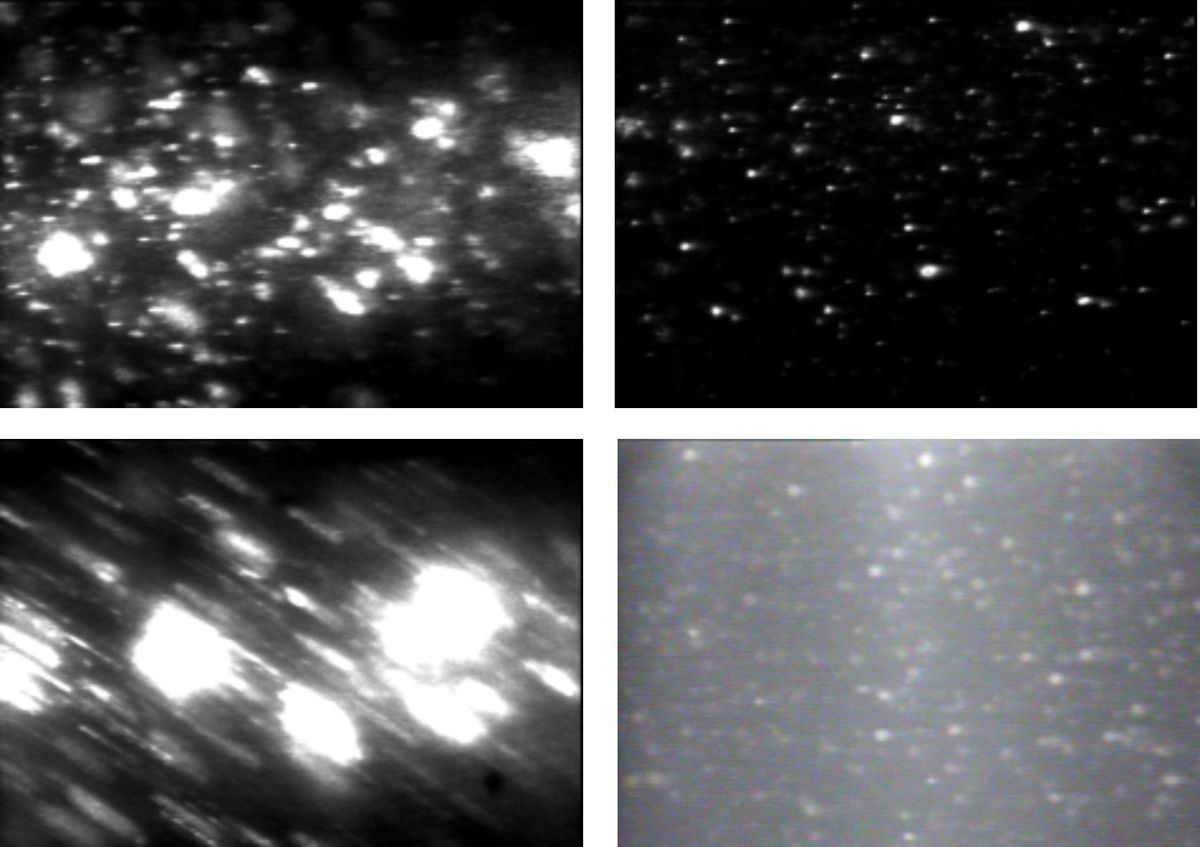
- Horizontal flow measurements: Which flow directions and flow velocities occur at which depths? How consistent are horizontal flow direction and flow rate within the measured depth profile, and how uniform is the flow over time? Are additional measurements required to compare, confirm, and substantiate the results? If temporal changes in flow rate are identified, can possible causes be determined? Does the amount and type of transported particles vary within the depth profile? Are hydraulic disturbances identifiable, and what are their possible causes?
This systematic approach ensures reliable results and makes data acquisition transparent and traceable. In addressing these issues, we draw in particular on our extensive practical experience.